How to test the tensile strength of handmade fishing line:What simple methods can I use at home to test the tensile strength of handmade fishing line?
Q: What simple methods can I use at home to test the tensile strength of handmade fishing line?
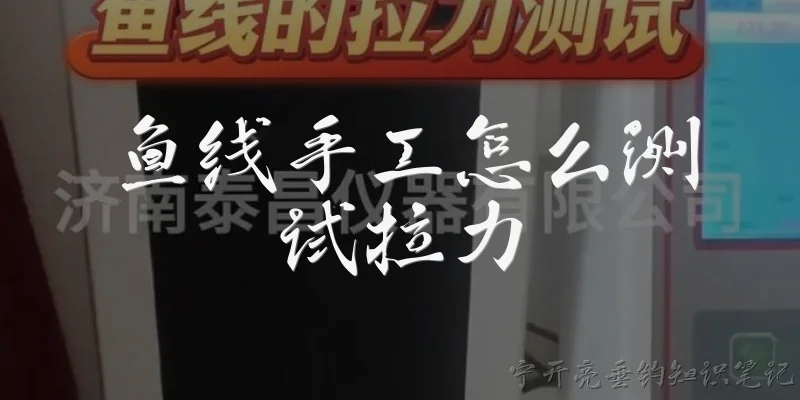
A: You can test handmade fishing line at home using a few simple methods. One common approach is the bucket test: tie a loop at one end of a 2-foot line sample and attach it to a sturdy hook or doorknob. Tie the other end to a bucket handle. Gradually add weight (e.g., water, sand, or known weights) until the line breaks. The total weight at failure is its tensile strength. Another method uses a spring scale: attach the line between a fixed point and a scale, then pull steadily until it snaps. Note the reading. For more precision, use a digital fish scale or luggage scale. Always wear gloves and eye protection, as snapping line can whip back. Test multiple samples, as handmade lines vary. Record averages for reliability. Avoid sudden jerks; apply slow, steady force. This mimics real fishing conditions better. Remember, knots reduce strength, so test with the knot you plan to use. These methods are inexpensive and effective for comparing different handmade batches.
Q: What tools and materials do I need to accurately measure the tensile strength of handmade fishing line?
A: To accurately measure the tensile strength of handmade fishing line, you'll need a few basic tools. A reliable scale is essential—either a digital fishing scale (up to 50 lb) or a luggage scale with a hook. For controlled pulling, a simple rig can be made from a sturdy board, two eye bolts, and a come-along or winch. Alternatively, a spring scale and a fixed anchor work. You'll also need a ruler or tape measure to ensure consistent sample lengths (e.g., 12 inches). Gloves and safety glasses are crucial. For weight-based testing, a bucket and known weights (e.g., dumbbells or water jugs) are handy. To reduce variables, use a swivel to avoid twisting. A camera or notebook helps record results. For scientific accuracy, a force gauge or tensiometer is ideal but costly. However, for handmade line, simple tools suffice. Always test multiple samples (at least 5) and calculate the average. Also, consider humidity and temperature, as they affect natural fibers. Keep a log of your material batches to track consistency.
Q: How do I interpret the results and ensure safety when testing the tensile strength of handmade fishing line?
A: Interpreting tensile strength results for handmade fishing line involves understanding that the breaking strength is the maximum load the line withstands before snapping. Record the highest weight or force reading at failure. However, for fishing, you need a safety margin—typically 20-30% below the breaking strength to account for knots, abrasion, and dynamic loads. If your line consistently breaks below your target, adjust your manufacturing (e.g., more twists, different fibers). Safety is paramount: always wear cut-resistant gloves and safety glasses. Work in an open area away from your face and body. Never stand directly in line with the tensioned line. Use a shield or barrier if possible. When pulling, apply force slowly and steadily; sudden jerks can cause unpredictable breaks. After testing, inspect the break point—fraying indicates weak spots. Keep a log of results and compare batches. If a line fails unexpectedly, discard that batch. Remember, handmade lines can vary, so test each new batch. Finally, dispose of broken line properly to avoid litter and wildlife hazards.
Words of experience
Common scenarios of "How to test the tensile strength of handmade fishing line"
【Alex】 Hey Jamie, I've been making my own fishing line from natural fibers. How can I test its tensile strength?
【Jamie】 Hi Alex! That's a cool project. To test tensile strength, you'll need a way to apply a controlled force until the line breaks. Do you have any equipment in mind?
【Alex】 Not really. I was thinking of just pulling it by hand, but that's not very precise.
【Jamie】 Right, hand-pulling won't give you reliable numbers. You could use a spring scale or a force gauge. Attach one end to a fixed point, the other to the gauge, and pull steadily.
【Alex】 That sounds doable. But how do I ensure the pull is consistent? I might jerk it.
【Jamie】 Good point. A motorized test stand would be ideal, but for DIY, you can use a bucket and gradually add weight (like sand or water) until the line breaks. That gives you a steady increase in force.
【Alex】 Oh, that's clever! So I hang the line, attach a bucket to the bottom, and slowly fill it. The total weight when it breaks is the tensile strength?
【Jamie】 Exactly. But make sure the line is vertical and not rubbing against anything. Also, use a lightweight bucket and add weight slowly to avoid dynamic loading.
【Alex】 What about the ends? I need to tie them securely without creating weak points.
【Jamie】 Use a knot that doesn't slip, like a palomar knot for fishing line. Or wrap the ends around a dowel and clamp them to distribute the load. Avoid sharp bends.
【Alex】 Palomar knot, got it. Should I test multiple samples to get an average?
【Jamie】 Definitely. Natural fibers vary, so test at least 5-10 samples. Record each breaking weight and calculate the average and standard deviation.
【Alex】 How do I measure the weight? I can weigh the bucket and contents afterward.
【Jamie】 Yes, use a kitchen scale. Or if you have a force gauge, you can pull until it breaks and read the peak force. That might be easier.
【Alex】 I might invest in a force gauge. Any recommendations for a budget one?
【Jamie】 Look for a digital force gauge with a capacity of at least 50 pounds, since fishing line can be strong. Brands like Imada or Mark-10 are good but pricey. For hobby use, a generic one from Amazon might suffice.
【Alex】 Okay. Also, should I test the line dry or wet? Fishing lines get wet.
【Jamie】 Great question. Wet testing is more realistic. Soak the line in water for a few hours before testing. Wet strength can be lower for some fibers.
【Alex】 I'll do both dry and wet tests to compare. Thanks for all the tips!
【Jamie】 You're welcome! Let me know your results. And remember to wear safety glasses when testing, as the line can snap back.