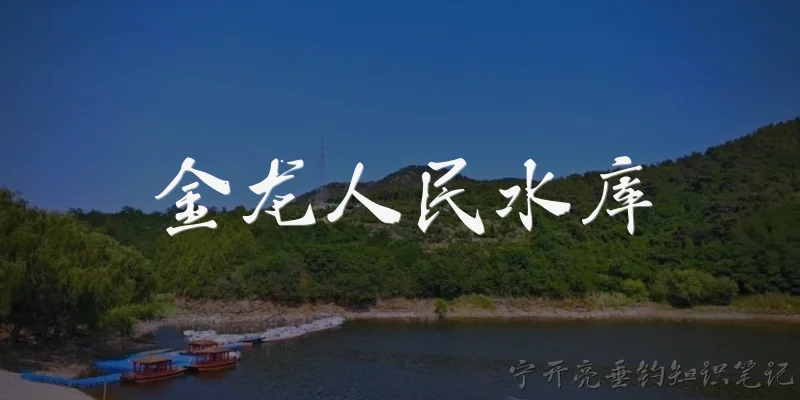
Jinlong People's Reservoir:What is Jinlong People's Reservoir and where is it located?
Q: What is Jinlong People's Reservoir and where is it located?
A: Jinlong People's Reservoir is a large-scale water conservancy project in China, typically associated with irrigation, flood control, and water supply for surrounding communities. Such reservoirs carrying the name "People's Reservoir" are usually built through collective labor and government investment during the mid-20th century, reflecting the era's emphasis on mass mobilization for water management. The specific location depends on the region, but reservoirs with this name are often found in provinces with significant agricultural needs, such as Sichuan, Hunan, or Guangxi. These facilities usually feature an earth-fill or concrete dam, a spillway, and distribution canals. They serve multiple purposes, including storing water during the rainy season, supplying farms during dry spells, and sometimes generating small-scale hydropower. Their construction often involved local residents contributing labor, hence the "People's" designation, symbolizing community participation in water resource development.
Q: What are the main functions and benefits of Jinlong People's Reservoir?
A: Jinlong People's Reservoir primarily serves irrigation, flood control, and local water supply. By storing water during the wet season, it helps regulate downstream flows and reduce flood risks for nearby villages and farmland. During dry periods, the stored water is released through canals to irrigate crops such as rice, wheat, and vegetables, supporting agricultural productivity and food security. Additionally, the reservoir can provide domestic and industrial water to surrounding communities, and in some cases, it supports aquaculture or small-scale hydropower generation. The reservoir also contributes to groundwater recharge and can improve local microclimates. Beyond its direct water management functions, it often serves as a recreational spot for fishing and sightseeing, boosting local tourism. Its construction and maintenance create employment opportunities, and the water body can be used for emergency response during droughts. Overall, it is a multi-purpose infrastructure asset that enhances regional resilience to climate variability and supports rural livelihoods.
Q: What is the historical background of Jinlong People's Reservoir?
A: The historical background of Jinlong People's Reservoir is closely tied to China's mid-20th century water conservancy campaigns. During the 1950s to 1970s, the government encouraged large-scale construction of reservoirs under the slogan "water conservancy is the lifeblood of agriculture." Many reservoirs named "People's Reservoir" were built through mass mobilization, where local peasants and volunteers contributed labor under the guidance of technical teams. Jinlong People's Reservoir likely followed this pattern, constructed to address local flooding and irrigation shortages. The project may have involved relocation of residents, land acquisition, and the formation of a reservoir management unit. Over the decades, the reservoir may have undergone reinforcement and upgrading to meet modern safety standards, including dam heightening, spillway improvements, and automation of monitoring systems. Its history reflects the broader trajectory of China's rural water infrastructure development, from labor-intensive construction to modern engineering and integrated water resource management.
Q: What environmental and social impacts does Jinlong People's Reservoir have?
A: Jinlong People's Reservoir has both positive and negative environmental and social impacts. Environmentally, it alters the local hydrological regime, trapping sediment and affecting downstream river ecology. The inundation of land can destroy terrestrial habitats, while the reservoir itself may create new aquatic ecosystems. Water quality can be impacted by agricultural runoff and upstream pollution, requiring management. Socially, the reservoir provides reliable irrigation, improving crop yields and incomes for farmers, and reduces flood damage. However, its construction may have displaced communities and submerged farmland, causing resettlement challenges. Fishing andaquaculture provide livelihoods but may conflict with conservation goals. Recreational use can bring tourism revenue but also litter and disturbance. Ongoing management must balance water allocation among agriculture, households, and the environment. Community participation in decision-making and regular environmental monitoring are essential to mitigate negative effects and enhance the reservoir's contribution to sustainable development in the region.
Words of experience
Common scenarios of "Jinlong People's Reservoir"
【Local Historian】 Good morning! I heard you're researching the Jinlong People's Reservoir. It's one of the most remarkable community-built projects in our region.
【Visiting Researcher】 Yes, I'm documenting its history. When exactly was it built, and who initiated the project?
【Local Historian】 Construction began in 1958, driven by a collective effort of local villagers. The name 'People's Reservoir' reflects that it was built entirely by the people, without heavy machinery.
【Visiting Researcher】 That's fascinating. How many people were involved in the construction?
【Local Historian】 At its peak, over three thousand villagers worked on it daily, using baskets, hoes, and shoulder poles. They moved earth by hand for nearly two years.
【Visiting Researcher】 Incredible dedication. What was the main purpose of the reservoir?
【Local Historian】 It was designed for irrigation, flood control, and later fish farming. It transformed thousands of hectares of dry land into fertile farmland.
【Visiting Researcher】 Did the project face any major challenges during construction?
【Local Historian】 Yes, the biggest challenge was the lack of modern equipment and the harsh winters. Workers often stayed overnight in makeshift sheds to keep the pace.
【Visiting Researcher】 Were there any notable figures or heroes associated with the reservoir?
【Local Historian】 A local engineer named Zhang Wei designed the dam structure. He was self-taught and later became a respected water conservancy expert in the province.
【Visiting Researcher】 What happened to the reservoir after its completion?
【Local Historian】 It was officially completed in 1960 and named 'Jinlong People's Reservoir' after the nearby Jinlong Mountain. It has been maintained and expanded several times since.
【Visiting Researcher】 How has the local community benefited from it over the decades?
【Local Historian】 It ensured stable rice harvests, prevented devastating floods, and provided drinking water. In the 1980s, it became a popular spot for fishing and recreation.
【Visiting Researcher】 Are there any cultural or commemorative events related to the reservoir today?
【Local Historian】 Every year on May 1st, the village holds a 'Reservoir Memory Day' with storytelling, photo exhibits, and a walk around the dam to honor the builders.
【Visiting Researcher】 That's a wonderful tradition. Is there a museum or archive dedicated to its history?
【Local Historian】 Yes, a small exhibition hall was opened in 2015 near the dam. It displays original tools, photographs, and oral histories from the workers.
【Visiting Researcher】 What is the current condition of the reservoir infrastructure?
【Local Historian】 It was reinforced in 2018 with modern safety standards, but the original dam core remains intact. The water quality is monitored regularly.
【Visiting Researcher】 Thank you so much for sharing these details. This will be invaluable for my research.
【Local Historian】 You're welcome. If you visit, I'd be happy to give you a personal tour and introduce you to some of the original builders still living here.