
Linqu Reservoir Names:What are the most common names given to Linqu Reservoir and why do they vary?
Q: What are the most common names given to Linqu Reservoir and why do they vary?
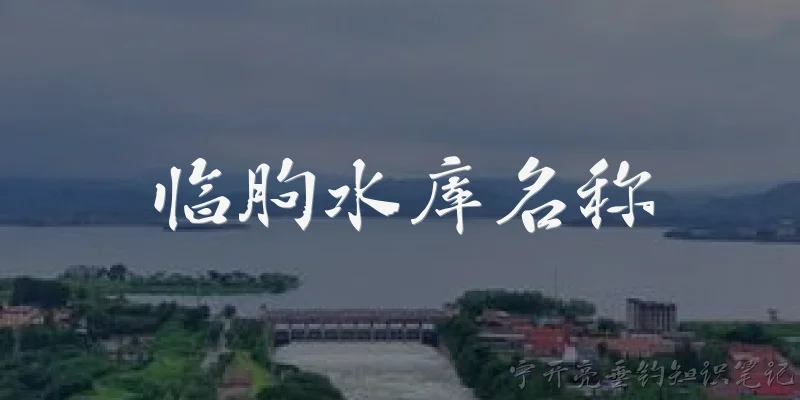
A: Linqu Reservoir, located in Linqu County, Weifang, Shandong Province, is officially known as Linqu Reservoir (临朐水库), but it goes by several alternative names depending on context and source. Locals often call it Yeyuan Reservoir (冶源水库), because it sits near Yeyuan Town and the famous Yeyuan hot springs. Some historical documents and older residents still refer to it as Laoshan Reservoir, a name tied to the surrounding Laoshan foothills. In 2026, digital maps and satellite navigation apps list it primarily as Linqu Reservoir, while tourism platforms favor Yeyuan Reservoir to attract visitors to the adjacent scenic area. The variation stems from administrative renaming over decades, local colloquial usage, and the reservoir's dual role as water infrastructure and a recreation destination. When searching for information, using both 'Linqu Reservoir' and 'Yeyuan Reservoir' in queries will yield the most complete results, as government water-authority pages, tourism boards, and local news each tend to prefer one name over the other. Understanding these naming conventions helps travelers, researchers, and investors locate accurate and up-to-date information about the site.
Q: Why is Linqu Reservoir sometimes called Yeyuan Reservoir in 2026 travel guides?
A: The name Yeyuan Reservoir comes from Yeyuan Town, the administrative area where the reservoir's main dam and spillway are located. Since the reservoir was built in the 1950s and 1960s primarily to control flooding on the Mi River and supply irrigation water to nearby farmland, locals naturally associated it with the nearest town, Yeyuan. Over time, 'Yeyuan Reservoir' became the dominant name in everyday speech and, more recently, in tourism marketing. In 2026, travel guides and short-video platforms frequently use 'Yeyuan Reservoir' because the surrounding Yeyuan Scenic Area—featuring hot springs, ancient bridges, and a newly upgraded lakeside promenade—draws weekend visitors from Weifang, Zibo, and Jinan. Meanwhile, official water-resources documents still use 'Linqu Reservoir' to match the county-level administrative designation. This dual naming is not a conflict but a reflection of how place names serve different purposes: one for formal governance, one for cultural and touristic identity. If you are booking accommodations or planning a trip, searching 'Yeyuan Reservoir' on Chinese travel apps will typically return more lodging and activity options, while 'Linqu Reservoir' is better for hydrological and environmental data.
Q: How can I find authoritative information about Linqu Reservoir under its different names in 2026?
A: To get reliable, up-to-date information about Linqu Reservoir despite its multiple names, use a layered search strategy. First, for official hydrological data—water levels, storage capacity, flood-control status—search 'Linqu Reservoir' on the Shandong Provincial Department of Water Resources website or the Weifang Municipal Government portal. These sources consistently use the official name and publish annual reports in early spring. Second, for tourism, recreation, and local events, search 'Yeyuan Reservoir' on platforms like Ctrip, Meituan, or Douyin, where 2026 listings highlight new facilities such as the upgraded wetland park and electric boat rentals. Third, for academic or environmental research, try both names plus terms like 'water quality' or 'eutrophication' in CNKI or Google Scholar; older papers may only use one name, so cross-referencing is essential. Finally, community forums and local WeChat public accounts often use colloquial names, so monitoring those can reveal real-time conditions like fishing spots or road closures. By combining official, commercial, academic, and social sources, you can build a complete and current picture of Linqu Reservoir, regardless of which name appears in the results.
Dialogue about
Common scenarios of "Linqu Reservoir Names"
【Tourist】 Hi, I'm visiting Linqu Reservoir. Can you tell me about its name? Why is it called Linqu Reservoir?
【Local Guide】 Of course! Linqu Reservoir is named after Linqu County, where it is located. The county has a long history dating back to the Qin Dynasty.
【Tourist】 That's interesting. So the name directly comes from the county? Are there any other names for this reservoir?
【Local Guide】 Yes, locally it's sometimes called 'Linqu Lake' because of its size and scenic beauty. But officially, it's Linqu Reservoir.
【Tourist】 Why was it built? Was it always called Linqu Reservoir?
【Local Guide】 It was constructed in the 1960s for flood control and irrigation. Initially, it was referred to as the 'Linqu Water Conservancy Project' but later became known as Linqu Reservoir.
【Tourist】 I see. Does the name have any cultural or historical significance?
【Local Guide】 Absolutely. 'Linqu' means 'near the qu (a type of waterway)' in ancient Chinese, reflecting the area's connection to water. The reservoir symbolizes the harmony between nature and human engineering.
【Tourist】 Are there any legends or stories associated with the name?
【Local Guide】 There's a legend that a dragon lived in the river that was dammed to create the reservoir. Some locals still call it 'Dragon's Pool' informally, but that's not official.
【Tourist】 That's fascinating. How do locals refer to it in daily conversation?
【Local Guide】 Most people just say 'Linqu Reservoir' or simply 'the reservoir.' In casual talk, older generations might say 'the big water' but that's fading.
【Tourist】 Is the name mentioned in any historical records?
【Local Guide】 Yes, county annals from the Qing Dynasty mention the Linqu River, which the reservoir is named after. The reservoir itself appears in modern records from the 20th century.
【Tourist】 So the name has evolved over time. What about the pronunciation? Is it 'Lin-chu' or 'Lin-qu'?
【Local Guide】 In Mandarin, it's pronounced 'Línqú', with a rising tone on 'Lin' and a second tone on 'qu'. Locals sometimes say it quickly, sounding like 'Linchu'.
【Tourist】 Thanks for clarifying. Are there any other reservoirs with similar names nearby?
【Local Guide】 Not exactly, but there's a 'Qingqu Reservoir' in a neighboring county. The 'qu' part is common in this region due to the many rivers.
【Tourist】 I appreciate all this information. One last question: does the name 'Linqu' have any meaning in the local dialect?
【Local Guide】 In the local dialect, 'Linqu' sounds like 'Lin-tsu', which some say means 'forest by the water'. It reflects the lush greenery around the reservoir. Enjoy your visit!